por charles | Oct 3, 2025 | Uncategorized
Okay, so check this out—NFTs suddenly matter to people who only last week cared about blue chips and memes. Wow! The thing is, hardware wallets were designed to protect private keys, not to render JPEGs. My first reaction was: great, another surface for attack. Hmm… but it’s more nuanced than that. Initially I thought NFT support on devices would just be a UI problem, but then I dug into how metadata, signing, and on-chain approvals interact with firmware and realized the whole stack matters — from the screen on your device to the way your desktop app talks to it.
Really? Yes. Hardware wallets sign transactions. Period. They don’t «store» NFTs like you store a photo on your phone. Short sentence. Yet people treat them like galleries. That misconception leads to risky shortcuts. On one hand, a Ledger or other hardware device dramatically reduces attack surface by isolating private keys. On the other, firmware bugs, compromised companion software, or careless approvals can undo that protection. On the other hand… though actually, on closer thought, user behavior is the most common weak link — not the hardware itself.
Here’s the thing. When you approve a transaction that grants an NFT marketplace permission to transfer tokens, you might be approving an open-ended allowance. Whoa! That approval can be abused later. So the advice «just use a hardware wallet» is necessary but not sufficient. I’m biased, but this part bugs me because people assume the wallet is a magic box that prevents every kind of scam. No — it makes certain attacks much harder, and other attacks still possible if you don’t control the entire chain: firmware, companion app, browser extensions, and the websites you interact with.
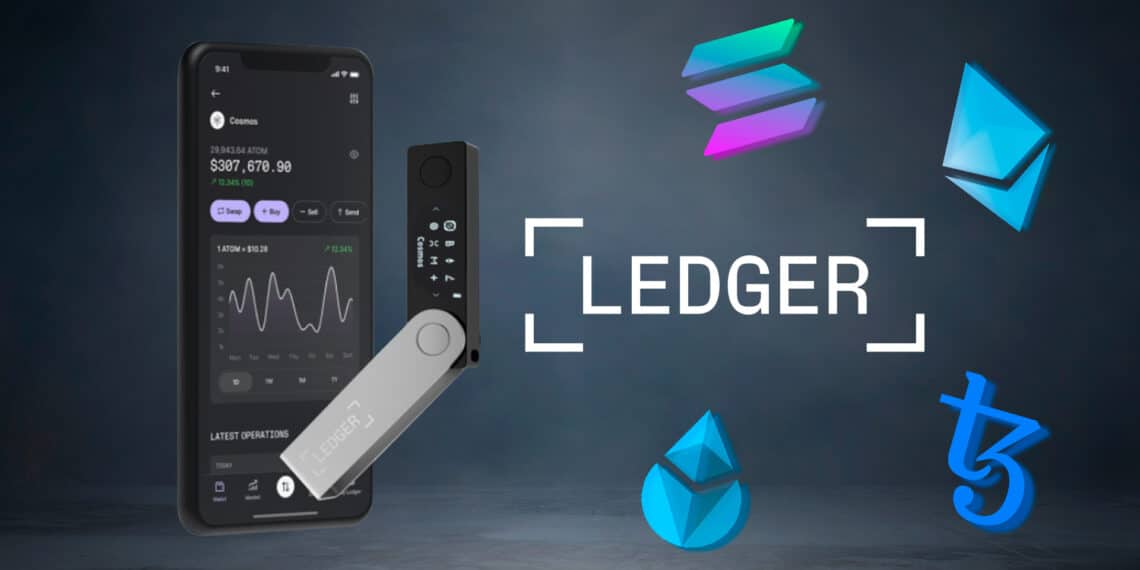
NFT Support: What it Actually Means on a Hardware Wallet
When a device claims «NFT support», it’s usually about two things. First, the device allows signing of ERC-721 or ERC-1155 transfers and approvals. Second, some companion app may fetch metadata to show you a preview—names, images, and maybe provenance. But preview data can be spoofed. So the device often displays only critical transaction details like contract address, token ID, and amounts. Not the pretty art. That’s intentional. My instinct said: trust the numbers, not the thumbnail. And that gut is right.
On the technical side, the wallet verifies that the transaction structure matches what you expect. If a marketplace asks for an «approve» transaction, the device will show the function name and parameters if the app parses them. If it can’t, you’ll just see raw data. This is where interfaces like ledger live try to help by decoding and presenting human-friendly details. But decode layers live outside the secure chip, so verify critical details yourself. Oh, and by the way, smart contracts are flexible. A single call can encode many actions. That flexibility is beautiful, and also terrifying.
Firmware Updates: The Good, The Bad, and The Paranoid
Firmware updates are both a safety net and a risk vector. Short sentence. Manufacturers push fixes for vulnerabilities, add support for new chains and NFTs, and improve UX. But updates also require trust: you must trust the vendor’s release process, the update signing keys, and the delivery channel. If those are compromised, an attacker could ship malicious firmware that exfiltrates keys or spoofs displays. Seriously?
Yes. So here’s how I approach updates. First, prefer official update channels. Use the vendor’s desktop app or their official website. Second, verify signatures when possible. Vendors like Ledger sign firmware binaries; you should verify that signature before updating, though many users skip this step for speed. Initially I thought most users would perform signature checks, but actually they rarely do — time pressure, FOMO, or just plain not knowing. Actually, wait—let me rephrase that: most people will click «Update» and hope for the best. That’s human. We rush. We skip steps.
Practically: keep a secondary, air-gapped machine for critical ops if you care about high security. Use only official software to deliver updates, and cross-check release announcements from the vendor’s verified channels. If somethin’ about a release feels off — strange timing, odd file names, different distribution URLs — pause. Contact support through official channels and double-check. If you run a business or hold large sums, consider hardware wallet models that support verified boot and signed updates with auditable logs.
Common Attack Scenarios and How to Mitigate Them
Phishing: the classic. Fake marketplaces, fake «update» prompts, clones of wallet apps. Short sentence. Always confirm the URL, check certificate details if you can, and never paste your seed into a website. Seriously, never. For NFTs, phishing often takes the form of fake «minting» or «claim» pages that trick you into approving a malicious permit.
Compromised Companion Software: your desktop app is a bridge. If it’s compromised, it can craft bad transactions and ask your device to sign them. The hardware wallet can prevent raw key extraction but not a user-authorized rogue transfer. So minimize the number of apps that connect to your device. Use official, up-to-date software, and isolate NFT transactions from your main holdings if you can — use a different device or a separate account.
Supply Chain Attacks: devices could be tampered with before you receive them. Buy from authorized resellers. If you get a second-hand device, reset it and verify firmware. Ledger and others make a factory reset easy; do it before setting up. If you’re super paranoid, buy from the manufacturer and check tamper-evident seals.
Practical Workflow for Handling NFTs Safely
1) Create an environment you can trust. Use a dedicated machine for wallet interactions when possible. 2) Keep firmware and companion apps updated via official methods, and verify signatures when available. 3) Use read-only previews critically: check contract addresses and token IDs yourself. 4) Limit approvals. Prefer «approve for single token» or set low allowances and revoke them after use. 5) Use passphrase-protected accounts or a posture of «cold storage for winners» — move high-value NFTs offline into an air-gapped wallet if needed.
Short step. A longer thought following: approvals are the silent killers — they allow marketplaces to move tokens later without asking again, and so you should treat them like leaving your house keys under the mat. Would you? Probably not. So set allowances carefully, and revoke unused ones with a simple transaction or via specialized tools that interact safely with your device.
Smart Contract Safety with NFTs
Contracts differ. Some are simple transfers. Others include royalties, marketplace hooks, or complicated royalty splits. That complexity can hide backdoors or logic that does surprising things. My method is to check verified contract source on Etherscan or equivalent explorers, and to prefer interacting with audited projects and reputable marketplaces. I’m not 100% sure every audit is trustworthy, but audits are a strong signal — not a guarantee.
Also: metadata can be mutable. An NFT’s on-chain pointer might reference content hosted elsewhere, so the art you see today may change tomorrow. Keep that in mind when assessing value and custodial risk. If you want immutability, look for content stored on-chain or pinned reliably via decentralized storage that you control access to.
Common Questions
How often should I update firmware?
Update when vendors release security patches or compatibility updates you actually need. Don’t chase every minor UI tweak if you’re mid-way through a large operation. That said, apply security patches promptly. If an update fixes a vulnerability that could be remotely exploited, prioritize it. Beware of update fatigue — but balance that against exposure.
Can my hardware wallet show me fake transaction details?
Possibly. The secure chip displays what the manufacturer firmware chooses to show. If metadata is parsed off-device and sent to the wallet as «friendly» labels, that layer could be spoofed. Trust the raw essential details — contract address, token ID, amounts — more than visuals. If a transaction looks weird, don’t sign it. If you’re not sure, pause and re-check on another interface.
Are NFTs safer on hardware wallets than in hot wallets?
Generally yes. Hardware wallets keep private keys off internet-connected devices, which makes remote key extraction much harder. But hardware wallets don’t automatically make you invulnerable to scams, bad approvals, or compromised companion apps. Think of them as a critical layer, not a silver bullet.
Okay — final thought (sort of). I like the direction hardware wallets are moving: better NFT support, clearer displays, and companion apps that decode actions sensibly. But there’s a gap between UX convenience and cryptographic safety. People want thumbnails and badges, and developers want to be friendly, and somewhere in the middle the security details can get glossed over. My instinct said that UX-first design would win; thankfully, the security community often drags the industry back to a safer balance. Somethin’ to watch: how vendors handle off-chain metadata and how they present approvals to users. That will determine whether NFTs stay collectible ephemera or become permanent liabilities.
I’ll be honest — I’m still skeptical about some marketplace practices. I also think a few solid habits will keep most people safe: verify firmware via official channels, minimize approvals, split holdings into cold and hot accounts, and treat beautiful NFTs like valuable objects that require as much care as any physical collectible. Things change fast here, and you need to adapt fast too. But slow down when signing transactions. Slow down. Seriously.
por charles | Ago 20, 2025 | Uncategorized
Whoa! Okay, hear me out. Prediction markets make my brain hum. Really? Yep. They’re part exchange, part betting parlor, part research lab — and Kalshi sits at that odd intersection. My first reaction was skepticism. Then I logged in and watched a market resolve a macro event in real time. Wow. Something about that felt like sci-fi, though actually it’s just regulated trading with a user interface that tries to be friendly (and sometimes fails).
Here’s the thing. Prediction markets are intuitive for a lot of people. You stake a bit of capital. You put your money where your belief is. If the event happens, you win. If not, you lose. Short sentence. But the regulated side complicates what would otherwise be a backyard game: compliance, KYC, settlement windows, contract specs, and liquidity constraints. Honestly, that part bugs me. It’s necessary, though—because when real money is involved you need rules. My instinct said keep it simple, but then I saw the legal work behind each event contract and I changed my tune.
Let me walk through what logging into a regulated prediction platform like Kalshi feels like, and what to watch for. First impressions matter. The login page is clean, almost too clean sometimes. Hmm… two-factor authentication is standard. Good. Initially I thought the hardest part would be picking a side. But then I realized the harder bit is understanding contract wording — the exact definition of «Yes.» On one hand the UI nudges you toward quick trades; on the other hand, the contract fine print can flip your outcome if you’re not careful. So take a breath.
If you’re after the quick checklist: email + strong password + 2FA + verified identity. Nothing fancy. Seriously? Yep. It’s the same dance as other regulated platforms. The onboarding asks for ID, sometimes an SSN, and a few minutes of patience while the KYC clears. But don’t be surprised if verification flags you for more info. That happened to me once when I used an old address. I was annoyed. Then I remembered that verification reduces fraud and keeps markets fair — so, trade-off accepted.

How to think about event contracts and liquidity
Okay, so check this out—event contracts aren’t all the same. Some are binary: yes/no. Some pay out on scales. Some expire quickly. My gut reaction? Favor clarity. If a contract’s language is murky, that’s often a sign of thin liquidity and lots of interpretation risk. Initially I thought volume was the only thing that mattered, but then I began to value clarity more. A liquid but ambiguous market can cost you in surprises. On the other hand, a perfectly worded contract with low volume means you might not be able to enter or exit at reasonable prices — that’s another problem.
Liquidity is basically the market’s pulse. It tells you whether you can get in and out. You can check bid-ask spreads and depth. If spreads are wide, consider smaller positions. If you’re planning to scalp or day-trade, focus on the markets that trade frequently. For longer-term event bets, think about settlement rules: when does the market resolve, and under what official source?
Also, fees. They’re small but they compound. Kalshi uses a simple fee model, but compare it to alternatives if you’re moving lots of volume. I’m biased toward transparency; hidden or complex fee schedules are a red flag for me. (Oh, and by the way… always do some quick math on expected fees before placing a trade.)
Practical login & security tips
When you head to the site, make sure you’re on the right domain — seriously, check the URL carefully. Phishing exists. Use a password manager. Enable 2FA. If you use multiple devices, note where your sessions are active. Kalshi uses standard protections, but user hygiene matters more than any single platform feature.
Here are some quick steps I use every time: 1) Verify domain. 2) Use a passphrase, not a single word. 3) Turn on 2FA and store backup codes safely. 4) Keep your KYC documents current (expired ID = annoying delays). These are simple. They also prevent a lot of headaches. Initially I thought I could wing the security stuff, but then I waited an extra week to get access after a suspicious login flagged my account — lesson learned.
One more thing: fund flow. Deposits and withdrawals have rules. There are holding periods sometimes, and transaction limits. On many regulated platforms, you can’t just instantly shuttle money in and out without provenance checks. On one hand, that’s inconvenient. On the other hand, it reduces illicit activity and protects good actors. See how I keep flip-flopping? On balance, I prefer safer rails even if they’re slower.
Using the platform strategically
Small portfolio rules work well here. Treat prediction positions as a way to express probabilistic views, not as pure profit machines. I use three buckets: quick trades (minutes–hours), event plays (days–weeks), and long-shot hedges (months). Not all markets suit all strategies. For example, macro event markets can move fast on new info; sports-adjacent or policy events sometimes only pop when a statement is released. Timing matters.
Also, don’t ignore market-making concepts. If you’re big enough, understanding where liquidity pools are and how pricing responds to order flow gives you an edge. For most of us, though, a steady, disciplined approach beats impulsive bets. This part is simple in theory, and very very hard in practice. Emotions will creep in — they always do.
If you want to dive in and see how Kalshi frames markets, try logging in and browsing contract language on a few test events. If you’re curious about their onboarding or want to jump straight to the homepage, the kalshi official site is the place to start. I’ll be honest: the site isn’t perfect, but it’s clear enough to get you into trades and learn quickly.
FAQ
What should I do if my verification is delayed?
Wait a short while, then check that your documents are clear and match your registered info. If it’s still stalled, contact support with screenshots and a polite note. Don’t open multiple verification attempts — that can slow things down. Patience helps, though I know that’s easier said than done.
Is prediction market trading legal?
Yes, in regulated venues that have obtained proper approvals and operate under oversight. Kalshi, for example, is structured to comply with US rules for event contracts. That legal mantle matters because it separates regulated platforms from informal betting setups.
por charles | May 27, 2025 | Uncategorized
Okay, so check this out—I’ve watched more token listings than I care to admit. Wow! The first trade on a new AMM pair can feel like a tiny festival. But then it can turn into a dumpster fire in minutes. My instinct said the same thing for months: liquidity matters more than hype. Seriously? Yes. And here’s the messy truth: most retail traders fixate on price alone, while the real fragile stuff lives under the hood.
Liquidity pools are the plumbing of DeFi. Short sentence. They determine how easily you can enter or exit a position, how much slippage you’ll face, and how vulnerable a token is to rug pulls or manipulation. On one hand, a deep pool signals confidence and usability. Though actually, wait—deep liquidity doesn’t guarantee fairness; it can mask concentrated ownership. Initially I thought more LP tokens meant safer markets, but then realized that supply distribution and lock status change everything.
I’ve got a rule of thumb from personal experience: check three things first—pool depth, who owns the major LP tokens, and whether those tokens are timelocked. Hmm… that’s basic but it stops a lot of obvious losses. On the flip side, even small pools can be fine if the tokenomics are tight and the team is transparent. This is a nuance most people miss. Something felt off about the charts I used to trust… somethin’ was missing.

How to read liquidity pools like a pro (without getting schooled)
First, look at pool size. Short. Then check token pair composition—ETH/USDC pools behave differently from ETH/low-cap meme tokens. Medium sentence here to explain: if most of the liquidity is in a stablecoin pair, that’s typically less volatile and less exploitable than two tiny tokens paired together. Longer thought now: when a pool has asymmetric liquidity—say 90% of value in the stablecoin side and 10% in the token side—price impact from selling the token can be extreme, and if a large holder flips, price swings magnify because the AMM curve responds to token ratio changes, not market orders.
Also inspect who holds the LP tokens. If founder wallets control removal rights, red flags appear fast. I’ve seen projects that advertised «locked liquidity» but that lock had loopholes. I’ll be honest—this part bugs me. (oh, and by the way… locking via a third party isn’t foolproof if the keys aren’t handled correctly).
Another nuance: impermanent loss affects LP providers, not traders directly, but it indirectly shapes incentives. If LP providers abandon a pool due to losses, liquidity evaporates, and suddenly your ability to trade becomes poor. So yeah—depth now, durability later. Initially I thought impermanent loss was only an LP problem, but then I noticed how it led to thinner markets for the token, making traders suffer.
Market cap: more than a headline number
Market cap is surprisingly misleading. Short. People read a «market cap» and equate it with real value. Medium: market cap is just price times circulating supply, and both can be distorted—through illusions like locked tokens that aren’t actually in circulation or supply that can inflate quickly. Longer thought to consider: when a token shows a $100M market cap but only $50k of liquidity across exchanges, that cap is fragile; a coordinated exit or a single large sell order will crater price because the market cap assumes all tokens could be sold at the current price, which is rarely true.
Here’s a little test I use: divide a token’s nominal market cap by its total dollar liquidity across main pools. If the ratio is too high, treat the token as bubble-prone. There isn’t a universal threshold, but numbers that look absurdly large compared to liquidity deserve skepticism. My experience shows that even tokens with «big» market caps can be soft as cotton when liquidity is thin.
On one hand, on-chain metrics give you transparency. On the other hand, those metrics are noisy and open to manipulation. Actually, wait—let me rephrase that: the data is transparent, but interpretation requires context and sometimes a little detective work. For example, whale wallets can layer sales across DEXs and CEXs to hide impact. That’s why you track flow, not just snapshots.
Real-time tracking: where traders win or lose
Real-time data is a non-negotiable for active traders. Short. If you trade based on daily snapshots, you’re late. Medium: a sudden dump, a large LP removal, or a vesting unlock can trigger cascading effects in minutes, and by the time aggregated sites reflect that, the damage is done. Longer thought: having tools that show live swaps, pool changes, token approvals, and liquidity movements—then overlaying that with market sentiment—lets you anticipate events rather than only reacting after the price move.
Okay, so check this out—I’ve been using monitoring tools that give me minute-by-minute feeds of pair activity. One day I spotted a pattern: repeated small sells that looked like iceberg orders, and within 40 minutes a much larger sell-off happened. My gut told me to step back, and that call saved me from a nasty hit. Whoa! That intuitive hit combined with behavioral pattern recognition is underutilized.
For people who want to combine signals quickly, a single-source trusted dashboard helps avoid tab-switching burnout. If you need a real-time scanner that surfaces newly listed pairs, liquidity changes, and suspicious volume spikes, try to incorporate an official tracker into your workflow early—it’s a small setup cost for a potentially huge payoff. One solid option is the dexscreener official feed, which I mention because it aggregates live token analytics in a deployable way that traders actually use day-to-day.
Practical checklist before you trade a token
Short list. Read it fast. Medium sentence: 1) Verify pool depth across major pairs. 2) Check LP token ownership and lock status. 3) Inspect token distribution and upcoming unlocks. 4) Monitor recent and historical swap patterns. 5) Confirm team wallets aren’t draining funds. Now a longer explanation: cross-reference on-chain explorer alerts with DEX pool data and social channels—discord and twitter can give early hints of panic or coordinated wash trading, but treat them skeptically and verify on-chain.
Also use limit orders where sensible. That sounds boring, but it reduces slippage in thin markets. If you’re market-making, manage position sizing tightly. My practical bias: never allocate more than you can mentally watch during high-volatility windows. I’m biased, yes. But being hands-on reduces surprises.
Two quick red flags that usually end the conversation fast: freshly minted contracts without source verification, and liquidity paired exclusively with another unverified token. If you see both, move on. Really.
Quick FAQ
How much liquidity is “enough”?
Depends on your trade size. For small retail trades (<$1k), a few thousand dollars of liquidity can be acceptable though risky. For larger trades, target pools with >$100k-$250k depth to avoid severe slippage. This isn’t exact math; it’s a practical rule of thumb shaped by market microstructure and experience.
Can tools reliably detect rug pulls?
They can flag suspicious patterns—rapid LP removal, dev wallet exits, or sudden token mints—but nothing is 100% predictive. Use automated alerts as early warning systems and pair them with manual checks. I’m not 100% sure about any predictive model, though the best setups reduce reaction time dramatically.
Do market caps matter for short-term trading?
They help for context but should not be the main decision metric. Real liquidity and flow are more actionable for short-term trades. Market cap is noise if liquidity is absent, and it can create false security if numbers are inflated by non-circulating token counts.
Trading DeFi tokens is part science, part pattern recognition, and part nervous system training. Short. You need both fast instincts and slow analytical checks. On one hand, trust the signal when the on-chain data screams; on the other hand, verify before you act because false alarms are everywhere. There’s no perfect checklist. But the combination of live monitoring, sensible sizing, and basic due diligence reduces catastrophic surprises.
I’ll leave you with this: don’t worship charts alone. Watch liquidity flow. Watch wallets. Watch timing. If something looks too good or too controlled, it often is. Hmm… sometimes the best trade is patience. Really.